Showing posts with label pganim. Show all posts

Friday, December 14, 2012

Advent Animation 2012


It's that time of year again! In eager anticipation and preparation for Christmas, I have revived my #adventanimation tag on twitter  Each day I"m sharing a new holiday animation - some are quirky, some are sweet, some are funny, some are visually stunning. Here's a taste of a few of them. If you like these, just follow me over to twitter!

My favorite, thus far is Marzipan Reindeer from emerging artist Holly and the Wolf. The weird and wild animation is by Tony Johnson.


I also love these pohutukawa loops made by David Montgomery. The pohutukawa trees are native to New Zealand. They bloom with red flowers at Christmas, in the midst of the southern summer. These abstractions of the blooms are just stunning.


Anyone who's had a bit too much Glüwein while strolling the Weihnachtsmarkt will relate to this little piece from MOKOST


And, one of my favorite ones from last year - the singing hedgehogs - a youtube extravaganza. Watch out! This one will timesuck the rest of your day away!

More awesome advent animation in the days to come. Head over to twitter to get the latest!

Friday, September 30, 2011

Ottawa, fair Ottawa!


I've just returned from the Ottawa International Animation Festival. Read my review of the films and festival gossip on the ASIFA-Colorado blog.

Sunday, January 16, 2011

Promoting Good Animation - January

A gloomy wintry day means making a cup of tea and a list of short films I've been meaning to watch. These are a bit longer than the usual minute attention span for a convenient distraction from work. But if you have some time and attention to spare, they are worth watching.

From the excellent Tiny Inventions studio, a mixed media mosh pit of a forensic tale.


Rotoscope done as it should be done, and the dry-wit poetry of Billy Collins as a bonus.


Something on the stranger side, but beautiful drawings and unusual editing and sound design make this piece riveting.


And just for kicks and giggles, if OK-Go can animate on toast, there's nothing you can't animate on. How about t-shirts?

Wednesday, July 7, 2010

Promoting Good Animation! New work from BLU

Hard to go wrong with BLU. This time he's gone more 3 dimensional, swallowing anything lying around on the streets into the animation. My favorite part is the trash can hermit crab.

Monday, May 24, 2010

Promoting Good Animation!

I must admit, I'm not caught up on this year's hot tv series. While my husband and in-laws are watching the final episode of "24", I am catching up on the latest online coolness in animation. Here are some highlights from my evening of streaming:

The most interesting use of rotoscope technique I've seen in a while. A really beautiful and innovative piece with many layers (figuratively and literally).

Another unusual piece by Hettie Griffiths is Cardif Viral

SCINTILLATION from Xavier Chassaing. This one, I can't quite figure out: But it is pretty cool to watch!


"Nude" a music video by Dancing Diablo. Some unusual paint-on-glass techniques combined with stopmotion. Note how smooth and slow the magnifying glasses move. That's not easy to do!

Want to see even more? You can see my whole list of favorites from the evening on Twitter!

Saturday, April 24, 2010

I just received a note from some people I worked with while I was in Africa in 2002. Their son Jon was 6 at the time and I taught him how to make animated flipbooks. Apparently, the animation bug bit him hard. I personally think the timing and creative use of the frame in this piece (done a few years ago when he was 12) makes this an exciting and stimulating few minutes of animation. Alas, I can't take much credit for his brilliance, but at least I started him down the road!


Sunday, March 14, 2010

FAST Conference Talk: Animation in the Media

This past weekend I presented a short talk titled Using Animation to Address Difficult and Complex Subject Matter at the Fulbright Academy of Science and Technology's annual conference. The theme this year was sustainability and the particular panel I was on dealt with using media as a collaborative tool for promoting and communicating the science, technology and business sides of sustainability. Below is a slightly expanded version of the talk with links to the films I highlighted. Many of the films below grapple with social justice issues very effectively. And the same principles translate very well into environmental issues as well.
--------------------------------------------------

Anyone who has sat down in front of the TV, movie theater or internet recently cannot fail to notice the prevalence of animation. Animation is coming into its own; there is hardly a TV commercial that doesn’t incorporate some sort of animation. Digital technology had made animation easier and inexpensive to create – anyone with a digital camera and a basic move making program on their computer cans move things around and take some pictures (or frames as we call them) and string them together into animation.

Because of this, filmmakers and especially documentary filmmakers are realizing just how important it is to include the visual feast that is animation into their productions, or create entire productions with animation. This goes beyond the typical scientific and informational visualization (animated graphs, medical and chemical illustrations, textbook images that move) with which we are all familiar and are very straightforward in their presentation of information. Below are several animated films that use the technique to drive home a theme or message that would be very difficult to do with live action.

Creating an emotional atmosphere

His Mother’s Voice
by Dennis Tupicoff


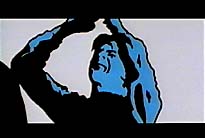
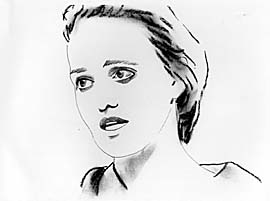
This film uses a radio interview of a mother recounting the loss of her son and animates two very haunting takes. The first is high contrast, bold, colorful images and a reenactment as the mother tells the story. The second take, set to the same soundtrack, does not reenact the story but simple moves throughout the house, the yard – wholly in the present. The animation is rendered with light pencil lines very little color. The sense of drama in the first take juxtaposed with the quiet grief of the second fully encompasses the many facets of this death.

Illustrating an emotional or mental state
Ryan
by Chris Landreth

An interview with Ryan Larkin, a promising young animator who destroyed his career through alcohol and drug abuse To visualize the effect of heroin eating away at a creative mind, Landreth creates a character whose face is disintegrating as he speaks, and yet there are sparks of brilliance still hanging by a thread. If you were to look at Ryan in live action, he would seem a sloppy, drug addict who can barely put together a sentence. But in visualizing him this way, the dignity of who is was in the past comes through the shell of the man he is now.

Using Humor to capture an audiece
The Meatrix

Leo, Chickity and Moopheous discover the true reality behind what we eat. Free range studios and Grace Studios ride the wave of the popular Matrix films to convey the unethical and unhealthy aspect f the commercial meat industry. A clever spoof, a well written script and a highly accessible web distribution plan created a buzz around this film reaching an audience far more extensive than the typical festival goers.

Animating the past
Persepolis
by Marjane Satrapi

An autobiographical coming-of-age story of a precocious and outspoken young Iranian girl that begins during the Islamic Revolution. The memory of the past is brought to life with character and humor and the comic book graphics not only provide a visual feast, but are able to put us in the experience of the child as she becomes a woman.

Dealing with graphic subject matter

Waltz with Bashir
by Ari Folman

After a conversation with an old friend, Ari Folman realizes that he can’t remember his experiences on an Israeli Army mission in the first Lebanon War of the early eighties. As Ari delves deeper and deeper into the mystery, his memory begins to creep up in surreal images …

Again, dealing with memory, but trying to present the graphic horror of war without turning the audience away. Graphic images are more palatable (and more emotional) when they are drawn rather than live action. At the end of the film there is about 3 minutes of newsreel footage that shows the carnage of the Lebanon massacre and honestly it turns your stomach. It brings the audience into reality right at the end for an overwhelming impact.

Dealing with shy subjects and overcoming audience stereotypes
Survivors
by Sheila Sofian

With powerfully understated empathy, Sofian combines voice-over interviews with battered women, and a counselor who works with "recovering" male batterers, with elegant animation to explore the experience of domestic violence from all sides.

Many of the women in this film did not want to be videotaped because they feared for their safety. However, they were willing to have their voice recorded. Unless you are a trained actor, it is impossible to ignore a camera in you face, but a microphone and a conversation can bypass that shyness and subjects are more likely to open up quickly. Additionally, having only the voice as information about a person allows the audience to put themselves in the subject’s place. When we are looking at video of another person, immediately we are judging them on their appearance. With no image to feed our stereotypes, we are forces to listen to the word spoken.

These are just a few examples of animation used in documentary and memoir. Animation is quickly developing into a distinct visual dialect and filmmakers will do well to verse themselves gain some level of fluency in this powerful medium.

Saturday, March 6, 2010

Promoting Good Animation: Bored to Death Intro


A particularly creative intro for a tv series directed by Tom Barham of Curious Pictures. I highly recommend watching it in HD (click here), as the type and expressions of the characters don't show up very well on smaller YouTube. Here's a link to a short interview with Tom Barham.

What makes a good title sequence? In addition to presenting the relevant information (i.e. above the line credits) it should visually tell the story of the film/show it is introducing (without giving too much away, of course!) I haven't seen Bored to Death, but from what I've read of the series and the way Barham approached this intro, it seems he was spot on!

Wednesday, February 17, 2010

Ebert's 10 best Animated Films of 2009


10 years ago who would have thought that there would even be 10 animated feature produced in 1 year. Roger Ebert's list of the year's 10-best animated films, give you a taste of how the industry had changed. Several of these films showcase animation by independent filmmakers - notably Nina Paley's Sita Sings the Blues and Ari Folman's Waltz with Bashir - defying the public conception of animation as Disney or Pixar - though both studios have made the list!

Alas, I have only seen 3 of the 10 thus far. Movie night, anyone?

Sunday, January 31, 2010

Sand Art or Sand Animation?

Sand animation has almost become a household word ever since Kseniya Simonova's winning performance hit the million view mark on Youtube. It is a riveting performance, set to epic music, telling a culturally charged story through the progressive live transformation of sand on a light table. I think a great part of the appeal is watching this beautiful, stoic young woman passionately throwing sand on the surface by the handful and making grand sweeping gestures that transform abstract shapes into something remarkably recognizable. We are watching an artist at work, and get a glimpse into the mystery of something we could never conceive of doing ourselves.

But is it sand animation? I suppose if we take the root definition of animation as "breathing life into something" we could argue that Simonova is bringing the sand to some semi-lifelike state of being through her careful movements. There is, certainly some spark of life in a Vermeer painting or a Michelangelo sculpture, so why not a sand painting? But epic music and sweeping gestures aside, when I look at those drawings my first thought is, "Wow, that would be really cool if it started moving!" Animation is the frame-by-frame infusion of life into anything (drawings, clay, objects and, yes, even sand) resulting in something seemingly independent of its creator. Simonova's creations are never detached from her. They are dependent on her presence for their transformative life, whereas a true sand animation can life and act effectively without the audience having any awareness of the animator. So, as an animator, and specifically one who has worked in sand, I take issue with the term animation being applied to Simonova's (and other less famous sand artists') admirable but static performance art.

So, to set the record straight, I offer up a few sand animations which effectively use the medium of sand to create vibrant, memorable films.

Of all sand animators, Caroline Leaf is probably the most well-known. Her 1974 adaptation of the Inuit legend "The Owl Who Married a Goose" might be the definitive black and white sand animation. Leaf's seamless switching between of positive and negative space and fluid transformations emphasize the strengths of sand as an animation medium.

Another classic that you will be hard pressed to find is Bitzbutz by Gil Alkabetz of Israel. Actually, I think he may have used salt instead of sand, but it's the same concept. Good luck trying to get a copy of this one. Thank goodness for youtube, which lets us all enjoy these films!

And finally, and most humbly, I offer up Tracks, a sand animation by yours truly. While most sand animation is black and white, I introduced color into the background by using collages made from theater gels which kept the brightness of the pure light behind the silhoueteted sand while adding the vibrancy of color.